
- All
- Product Name
- Product Keyword
- Product Model
- Product Summary
- Product Description
- Multi Field Search
Views: 0 Author: Site Editor Publish Time: 2026-06-13 Origin: Site


Palm trees act as highly visible, premium architectural focal points in any modern landscape design. Unfortunately, choosing the wrong species often causes expensive transplant failures. You also risk property damage or bloated maintenance budgets down the line. You might not realize it, but palms are technically large, woody monocots. Botanically speaking, they are closer to giant grasses than typical canopy trees. Because of this, their root behaviors and nutrient uptake differ completely from traditional hardwoods. If you treat them like standard oaks or maples, they will struggle to thrive. We built this comprehensive guide to give you a rigorous, evaluation-driven framework. We want to help you confidently select the right species. You will learn to navigate site constraints, maximize functional utility, and guarantee long-term plant viability for your outdoor projects.
Match constraints first: Always filter options by minimum winter temperatures (hardiness zones) and soil drainage capabilities before looking at aesthetics.
Account for mature dimensions: Failing to project a palm's mature height and canopy width can result in interference with overhead utility lines or structural foundations.
Function dictates form: Differentiate species by their landscape utility, such as using dense palmate fronds for privacy or towering pinnate fronds for avenue framing.
Plan for maintenance realities: Distinguish between drought-tolerant and drought-resistant varieties, and account for the debris footprint (fruit droppings and dead fronds).
You must establish hard environmental constraints before considering aesthetic preferences. Temperature limits represent the most critical barrier to success. Every palm tree species has a strict frost threshold. A brief, unexpected freeze can permanently damage the meristem. The meristem is the central growing point of the plant. If this heart tissue dies, the entire palm will inevitably perish.
True tropical varieties require high humidity and stable year-round warmth. They simply cannot survive in transitional climates. Conversely, installing a cold hardy palm provides excellent insurance for regions experiencing seasonal temperature dips. Species like the Windmill Palm and Pindo Palm tolerate surprising levels of frost. They offer a tropical aesthetic without the severe vulnerability of equatorial species.
Common Palm Tree Temperature Baselines | |||
Palm Category | Example Species | Lowest Tolerable Temp (°F) | Ideal USDA Zones |
|---|---|---|---|
Cold Hardy | Windmill Palm | 5°F to 10°F | 7b - 11 |
Cold Hardy | Pindo Palm | 10°F to 15°F | 8a - 11 |
Sub-Tropical | Queen Palm | 20°F to 25°F | 9a - 11 |
True Tropical | Lipstick Palm | 40°F to 50°F | 10b - 11 |
Professionals always emphasize evaluating the size at maturity. A tiny potted seedling looks harmless today. However, it can easily exceed 50 feet in height within a few decades. Failing to map this growth trajectory invites future disaster.
You must perform rigorous spatial checks before breaking ground. Carefully assess the following site elements to prevent disruption from expanding plants:
Overhead Power Lines: Ensure the mature canopy will never breach utility clearance zones.
Roof Eaves and Gutters: Plant trunks far enough away to accommodate high wind sway.
Subterranean Utility Maps: Check for buried water pipes, gas lines, and internet cables.
Pedestrian Walkways: Leave ample room for expanding root balls to prevent cracked pavement.
Soil quality dictates plant health. Palms are highly susceptible to root rot in saturated soils. Their root systems need constant access to oxygen. Dense, compacted earth traps water and suffocates the plant.
You must face a strict implementation reality here. If you are planting in heavy clay, you cannot just dig a hole and hope. Installing an in-ground drainage system is a non-negotiable requirement. Alternatively, you can utilize raised planting mounds. Mounds elevate the root zone above the dense native soil. This elevation allows gravity to pull excess moisture away from sensitive roots.
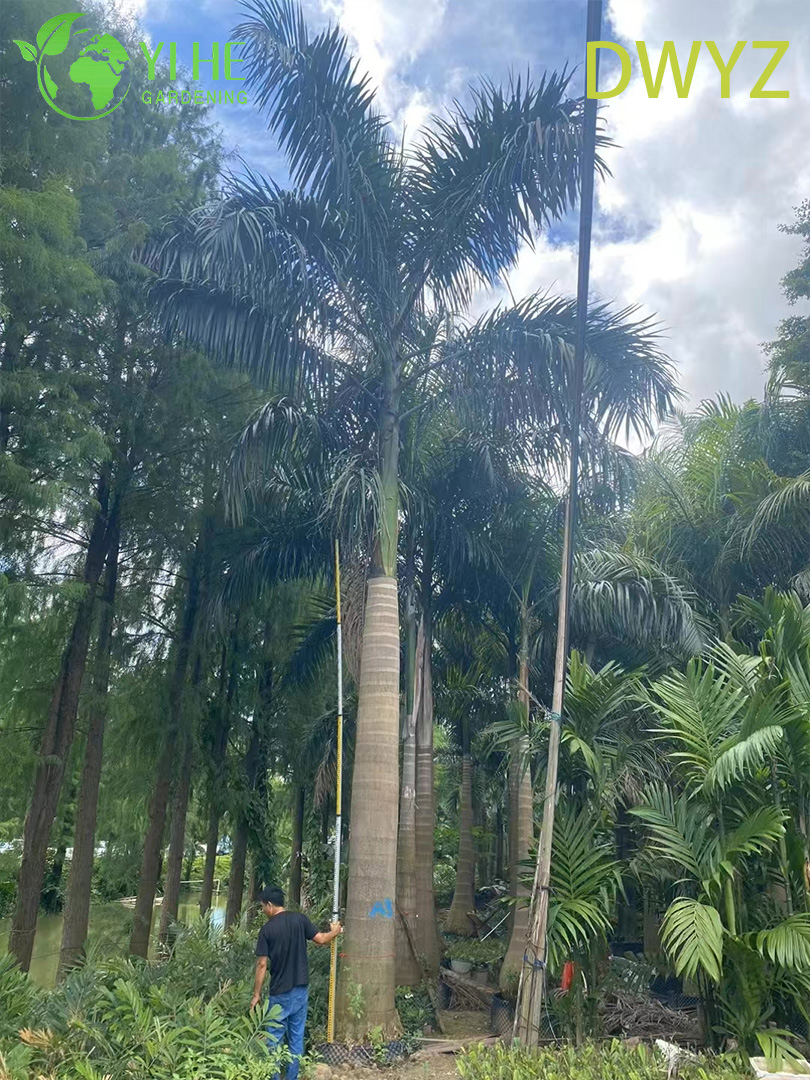
Palms excel at creating dramatic visual corridors. Tall, uniform species work perfectly to frame long driveways. They also elevate commercial property entrances. Repetition creates a sense of rhythm and grandeur in luxury landscaping.
For structural uniformity and upscale desert aesthetics, designers frequently specify the majestic date palm. The Medjool variety boasts a thick, textured trunk and a commanding silver-green canopy. These specimens provide instant architectural maturity. They anchor large buildings and create an immediate sense of established luxury.
Poolside environments demand careful species selection. You must evaluate options based on minimal litter drop. Heavy shedding can quickly clog expensive pool filtration systems. It also creates a constant cleaning burden for property owners.
The iconic coconut palm thrives in coastal or deep tropical zones. It features high salt tolerance and stunning visual appeal. However, it requires intense, direct sunlight to flourish. When placing these near a pool, position them downwind. This placement minimizes the risk of fronds or debris blowing into the water.
Not all palms tower into the sky. Many varieties stay relatively low and bushy. These characteristics make them ideal for privacy screens. To build an effective barrier, you must understand leaf structures.
Structural Comparison Chart: Palmate vs. Pinnate | |||
Leaf Structure Type | Visual Shape | Best Landscape Application | Example Species |
|---|---|---|---|
Palmate | Fan-shaped, wide, and structurally rigid. | Dense borders, visual blocking, and low screens. | European Fan Palm, Bismarck Palm |
Pinnate | Feather-shaped, elongated, and softly swaying. | High canopies, avenue framing, and filtered shade. | Roystonea regia, Foxtail Palm |
We highly recommend clustering multi-trunk or low-growing palmate species. The European Fan Palm serves as an excellent example. Planting these fan-shaped varieties in tight groupings creates an immediate, opaque visual barrier. They block unwanted sightlines much faster than delicate pinnate varieties.
Landscape professionals often misuse watering terminology. You must clarify the vocabulary to ensure plant survival. "Drought-resistant" means the plant can survive extended dry periods entirely on its own. These species endure harsh conditions without supplemental watering once mature.
"Drought-tolerant" carries a very different meaning. These plants can handle mild dry spells. However, they still require scheduled, deep watering to maintain optimal health. This distinction becomes critical during the vital 6-to-12-month establishment phase. Newly transplanted palms experience severe root shock. They demand consistent moisture to regenerate their root networks. Neglecting irrigation during this window guarantees transplant failure, regardless of the species' drought rating.
Beautiful canopies often hide hidden maintenance burdens. You must meticulously assess the cleanup costs associated with fruit-bearing palms. Large clusters of seeds or sticky fruits create major messes when they fall.
We strongly warn against planting heavy fruit droppings near specific hardscapes. Keep them away from driveways, pedestrian walkways, or porches. Falling debris creates severe slip hazards for guests. Crushed fruits also cause permanent organic staining on expensive concrete or pavers.
Furthermore, you must differentiate between frond shedding behaviors. Self-cleaning palms naturally drop their dead fronds. They shed heavy leaves completely on their own, keeping the trunk looking neat. Conversely, other varieties stubbornly hold onto dead fronds. They form a thick "petticoat" of dry, brown vegetation. Maintaining these non-shedding trees requires commercial lifts and expensive manual pruning services.
Self-Cleaning Examples: Royal Palm, Foxtail Palm, King Palm.
Manual Pruning Required: Mexican Fan Palm, California Fan Palm.
Budget constraints heavily influence your procurement strategy. You must weigh the upfront cost of mature specimens against the multi-year wait times of juvenile plants. Large, mature trees provide instant gratification and immediate architectural scale. However, they carry massive price tags and require heavy machinery for installation.
Juvenile plants cost a fraction of the price. They also adapt faster to native soils because their root balls remain small. The obvious drawback involves time. You might wait ten to fifteen years before a juvenile tree provides any meaningful shade or visual impact.
Sourcing quality material makes or breaks a landscaping project. You need strict criteria for selecting commercial nurseries. Always inspect root ball integrity before taking delivery. Roots should feel firm and cleanly cut, never mushy or severely pot-bound.
Examine the trunk carefully. Look for a lack of trunk bottlenecking. A sudden narrowing of the trunk diameter signals a period of severe past stress. This could mean past droughts or nutrient starvation. You should also verify the nursery's acclimatization practices. Sun-grown palms placed directly into shaded landscapes will suffer extreme shock.
If you manage large-scale development projects, you need dependable supply chains. Sourcing a royal palm wholesale requires careful coordination. You must emphasize the need for batch uniformity. Trees lining an avenue must match in height and caliper. Additionally, always demand state-certified, disease-free documentation. Lethal yellowing and other pathogens can wipe out an entire wholesale batch in months.
Selecting the right palm tree demands a structured, logical approach. You must move deliberately from environmental baseline checks to functional aesthetic choices. Always end your process with strict maintenance assessments. Ignoring any of these steps compromises the entire project.
To guarantee success, follow these actionable next steps:
Cross-reference your local USDA hardiness zone with your desired species.
Map the mature height and canopy width against your site's physical constraints.
Evaluate the long-term maintenance footprint, including pruning needs and fruit litter.
Consult with a certified arborist or specialized landscape architect.
We highly recommend conducting a professional site soil test before finalizing your plant schedule. Proper drainage and nutrient baselines will ensure your landscape investments thrive for decades.
A: No, they are not true palms. Cycads and sago palms share aesthetic similarities, featuring woody trunks and green fronds. However, they belong to entirely different botanical families. Cycads reproduce via cones, not flowers. They possess distinct pest vulnerabilities and contain highly toxic compounds dangerous to pets and humans.
A: The standard establishment protocol requires frequent moisture. You should water the root zone daily for the first two to three weeks. After this initial period, taper the schedule down to one or two deep watering sessions weekly. Always adjust this frequency based on your specific soil drainage rates to prevent root rot.
A: Yellowing fronds indicate several possible issues. Natural aging causes the lowest, oldest fronds to yellow and die. This is perfectly normal. However, widespread yellowing often points to systemic issues. Poor soil drainage can suffocate roots. Alternatively, the plant may suffer from specific macronutrient deficiencies, particularly Magnesium, Potassium, or Nitrogen.


