
- All
- Product Name
- Product Keyword
- Product Model
- Product Summary
- Product Description
- Multi Field Search
Views: 0 Author: Site Editor Publish Time: 2026-07-26 Origin: Site


Receiving bulk shipments of delicate foliage carries inherent financial risk, with transit shock being the primary driver of unsellable inventory. Ferns possess fine root systems and thin fronds that rapidly lose moisture during shipping. The sudden drop from greenhouse humidity to dry transit conditions causes immediate cellular stress, leading to browning, crisping, and potential plant death if not immediately corrected. When pallets sit on loading docks or in dry holding areas, the transpiration rate accelerates, draining the plant's internal water reserves faster than the stressed roots can replenish them. Establishing a standardized, data-backed humidity recovery protocol is critical for nurseries, retailers, and interior landscapers to stabilize newly arrived stock, minimize shrinkage, and protect profit margins on foliage investments. Without a dedicated triage environment, facilities risk losing entire shipments to irreversible desiccation within the first forty-eight hours of arrival.
Target Recovery Humidity: While standard maintenance requires 40–50% relative humidity, post-transit recovery demands an elevated micro-climate of 60–75% for the first 7–14 days.
The Humidity Cliff: Newly delivered stock must be protected from indoor environments that mimic desert-like conditions (5–10% RH) during the critical initial recovery window.
Phased Acclimation: Instantly moving ferns from dark, dry shipping boxes to standard retail floors causes secondary shock; phased environmental stepping is required.
Root vs. Frond Hydration: Ambient humidity must be balanced with careful substrate moisture management—fine roots must remain evenly moist without becoming waterlogged.
Infrastructure Scalability: Pebble trays and bathroom placement are sufficient for single houseplants, but commercial recovery requires automated humidification, greenhouse tenting, and precise airflow management.
Ferns lack the thick cuticles found on other tropical plants. These wax coatings normally trap moisture inside the leaves and provide a buffer against dry air. Without them, ferns experience extremely high transpiration rates. They lose water to the surrounding air almost constantly, relying entirely on ambient moisture and root uptake to maintain turgor pressure. Their fine, fibrous root systems also desiccate rapidly in transit. When substrate moisture drops during a multi-day freight journey, the roots cannot pull enough water to support the fronds. Cultivation environments maintain high humidity levels, often exceeding eighty percent. Transit trailers and unshaded retail spaces present an extreme environmental cliff. Indoor relative humidity can drop to desert-like levels of 5–10% depending on the HVAC system. This sudden change shocks shade garden foliage plants severely, forcing them to cannibalize their own older fronds to keep the crown alive.
To understand the mechanics of this moisture loss, we must look at the stomata on the underside of the fronds. In dry environments, these pores remain open as the plant attempts to regulate its temperature, inadvertently venting vital water vapor. If the root ball is simultaneously dry, the plant enters a deficit. The vascular tissue shrinks, and the structural integrity of the frond collapses. This is why immediate environmental correction is the only viable intervention.
You must differentiate between temporary stress and permanent tissue death to allocate labor effectively. Reversible symptoms include drooping fronds, slight paling of the green pigment, and dry but flexible tips. These plants simply need rapid rehydration and a stable micro-climate. Irreversible damage looks much worse and requires immediate culling. You will see fully crisped fronds that shatter when touched. Brittle crowns and rotting rhizomes indicate severe issues that cannot be fixed with humidity. Rot often points to cold damage or overwatering prior to shipping, meaning the damage occurred before the plant even entered the dry transit phase.
Inspect the crown of the fern first; if it is firm and green, recovery is possible.
Check the flexibility of the lower fronds; snapping indicates permanent cellular death.
Examine the root tips by gently sliding the nursery pot off; white or tan tips mean the roots are viable, while black, mushy roots indicate rot.
Establish clear baseline success criteria for your recovery zones. You should see visible turgor pressure return within 48 hours of humidity correction. If the fronds do not lift by then, the cellular damage is likely permanent, and the unit should be written off to prevent wasting bench space.
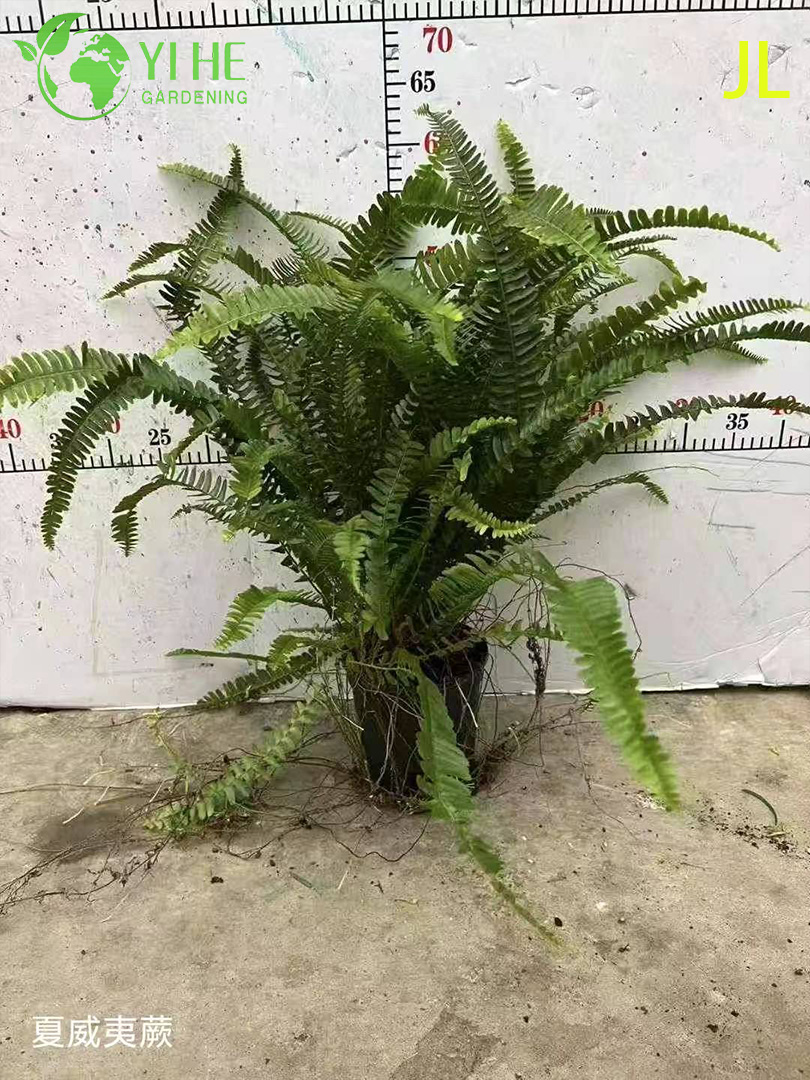
Standard consumer advice often recommends 40–50% humidity for ferns. This baseline is entirely insufficient for plants actively recovering from severe transit desiccation. A stressed plant cannot repair cellular damage in average room humidity because the transpiration rate still exceeds the damaged root system's uptake capacity. The evidence-based recovery target is much higher. You must maintain 60–75% relative humidity (RH) in your staging area. This elevated moisture level halts rapid transpiration. It allows the damaged root system time to re-establish water uptake without the constant demand from the foliage. Only after the plant stabilizes and shows new fiddlehead growth can you lower the humidity to maintenance levels.
Operating a recovery zone at 70% RH requires dedicated space separated from standard inventory. Mixing recovering ferns with succulents or standard aroids at this humidity level will cause fungal issues in the non-fern inventory. Therefore, isolation is a mandatory operational practice.
Different fern varieties require specific environmental parameters to recover successfully. Treating them all identically leads to unnecessary losses and inefficient use of facility resources.
Fern Variety | Vulnerability Profile | Target Recovery RH | Maximum Airflow Tolerance |
|---|---|---|---|
Boston Ferns (Nephrolepis exaltata) | Highly susceptible to rapid shedding ("needle drop") under sudden RH drops. | 65%+ RH | Moderate (Indirect breeze) |
Kimberly Queen Ferns (Nephrolepis obliterata) | Structured, sword-shaped fronds. Higher tolerance for lower humidity. | 60% RH | High (Direct HAF exposure) |
Maidenhair Ferns (Adiantum) | Paper-thin fronds with zero drought tolerance. Prone to immediate crisping. | 70–75% RH | Low (Gentle circulation only) |
Bird's Nest Ferns (Asplenium nidus) | Thicker fronds, prone to crown rot if water sits in the rosette. | 60% RH | Moderate (Ensure crown dries) |
Moving plants directly from high-humidity recovery to dry retail floors causes secondary shock. You must stage a phased acclimation process. Implement a 14-day step-down protocol for all indoor fern potted plants. Start at 70% RH in a dedicated staging area. Gradually reduce the humidity by 5–10% every few days. Monitor the foliage closely during each drop. Rushing this acclimation forces the plant to shed leaves to conserve water, ruining its visual appeal and retail value.
Days 1-4: Maintain 70% RH, keep substrate evenly moist, zero direct light.
Days 5-8: Drop to 60% RH, introduce low ambient light, monitor for dropped leaflets.
Days 9-12: Drop to 50% RH, allow top half-inch of substrate to dry slightly between waterings.
Days 13-14: Move to final retail or installation environment at 40-50% RH.
Slow stepping ensures the plant reaches the target environment without dropping fronds. If you notice excessive shedding during a step-down phase, immediately bump the humidity back up by 10% and hold it there for an additional three days before attempting to lower it again.
Evaluating your infrastructure ensures you can handle large shipments effectively. Commercial humidifiers work well for open staging areas. Ultrasonic and evaporative models provide automated control and high output, capable of pushing a 1,000-square-foot room to 75% RH in under an hour. However, they require regular maintenance and daily sensor calibration. They also produce mineral dust if you do not use reverse osmosis (RO) water, which coats the fern fronds and blocks photosynthesis. Micro-climate tenting offers an alternative for smaller batches. Poly-tunnels or humidity domes trap moisture efficiently. They are cost-effective and create immediate RH spikes without requiring heavy machinery.
Tents are ideal for highly sensitive varieties like Maidenhairs. The main drawbacks include heat trapping and poor natural airflow. If a poly-tunnel is placed under strong grow lights, the internal temperature can spike to lethal levels within hours. You must monitor internal tent temperatures constantly and vent them manually if they exceed eighty-five degrees Fahrenheit.
High humidity introduces significant operational risks. Botrytis and other fungal infections thrive in stagnant, damp air. You must manage airflow actively to prevent disease outbreaks that can wipe out an entire shipment faster than transit shock. Install horizontal airflow (HAF) fans in all recovery zones. These fans keep the air moving across the plant canopy, disrupting the micro-layer of stagnant moisture that fungal spores need to germinate.
The goal is to maintain high ambient humidity while keeping actual leaf surfaces dry. Proper air exchange balances hydration needs with disease prevention. Never allow condensation to sit on fern fronds overnight. If you see water droplets forming on the foliage, your fans are either undersized or positioned incorrectly. Adjust the angle of the HAF fans to create a circular vortex of air around the perimeter of the staging area rather than blasting the plants directly.
The first two hours post-delivery dictate the survival rate of the shipment. Remove all plants from boxes and shipping sleeves immediately. This releases trapped ethylene gas that accelerates leaf drop and allows the foliage to breathe. Next, check the substrate moisture of every plant. Maintain a lightly and evenly moist standard. Do not allow roots to sit in stagnant water. Waterlogged soil triggers anaerobic rot rapidly, especially in plants that have shut down their transpiration due to dark shipping conditions.
Use bottom-watering techniques to rehydrate desiccated peat-based substrates evenly. Peat becomes hydrophobic when completely dry, meaning top-watering will simply run down the sides of the pot and out the drainage holes, leaving the root core bone dry. Submerging the bottom third of the pots in a shallow tray of water for twenty minutes allows capillary action to pull moisture up into the root zone gently. Controlled overhead misting lines also work for ambient humidity, provided you have adequate HAF fans running to dry the foliage before nightfall.
Social media often spreads harmful plant care advice that destroys commercial inventory. Many sources recommend aggressive pruning of brown fronds immediately upon arrival. Do not do this. Wait 7–10 days until the plant stabilizes. Cutting tissue compounds cellular stress on an already weakened plant. The fern is actively pulling mobile nutrients out of those dying fronds to support the crown; cutting them off prematurely robs the plant of those resources.
Another common myth involves immediate repotting or down-potting stressed root systems. Strictly avoid root disturbance during the humidity acclimation phase. Repotting tears fragile root hairs. This completely disrupts water absorption and usually kills the fern within forty-eight hours. Keep the plant in its original nursery pot until it has fully acclimated to your facility and is actively pushing new growth.
Your recovery efforts depend heavily on how the plants were prepared for shipping. Create an evaluation framework for auditing your suppliers. Inspect how wholesale fern plants arrive at your dock. Quality suppliers use moisture-retaining shipping sleeves that create a temporary micro-climate during transit. They apply appropriate pre-shipment watering protocols. The soil should arrive moist but not soaked. Soaked soil in dark boxes leads to root rot and fungal blooms.
Temperature-controlled freight is also a mandatory requirement. Ferns exposed to temperatures below fifty degrees Fahrenheit will suffer cellular collapse that mimics drought stress but is entirely irreversible. Track arrival conditions meticulously. Take photographs of the substrate, the foliage, and the packaging materials. Hold suppliers accountable for poor packaging standards and request credits for inventory that arrives outside of acceptable moisture parameters.
Audit your current receiving areas to establish baseline relative humidity levels using calibrated hygrometers.
Procure commercial environmental monitors to track RH and temperature continuously, setting alerts for dangerous drops.
Install horizontal airflow fans in all designated high-humidity staging zones to prevent Botrytis outbreaks.
Establish a strict 14-day triage and step-down protocol for all incoming fern shipments to prevent secondary shock.
Train receiving staff to avoid pruning or repotting plants during the initial recovery window to protect fragile root systems.
A: The ideal humidity during the initial recovery phase is 60–75%. This elevated level halts rapid moisture loss and allows the root system to recover. After 7 to 14 days, you can gradually step the humidity down to a standard maintenance phase of 40–50%.
A: Recovery typically takes 7 to 14 days. The exact timeline depends on the severity of the moisture loss and the specific fern species. Boston ferns may take the full two weeks to stabilize, while hardier varieties might show turgor return within days.
A: No, misting is highly ineffective for bulk recovery. It only raises humidity for a few minutes and leaves water sitting on the fronds. This significantly increases the risk of fungal pathogens like Botrytis. Ambient commercial humidification is required.
A: Brown tips indicate rapid moisture loss and low ambient humidity during transit. This is exacerbated when plants are moved directly into dry retail air, which can sit as low as 5–10% RH. Immediate humidity stabilization is required to stop further browning.
A: Absolutely not. Disturbing the fine root system of an already stressed fern severely disrupts its ability to absorb water. This compounds transit shock and drastically increases the mortality rate. Wait until the plant is fully acclimated before considering repotting.
A: No, you should wait 7–10 days before pruning. Immediate shearing forces the plant to expend energy sealing wounds while it is already fighting severe dehydration. Let the plant stabilize in high humidity first, then remove the dead tissue.


