
- All
- Product Name
- Product Keyword
- Product Model
- Product Summary
- Product Description
- Multi Field Search
Views: 0 Author: Site Editor Publish Time: 2026-11-09 Origin: Site


The growing trend of biophilic design in modern workspaces is no longer just an aesthetic luxury. It is a proven strategy for boosting employee productivity, reducing stress, and enhancing overall workplace satisfaction. Picture a newly renovated corporate boardroom or a bustling open-plan floor. Strategically placed greenery breathes life into these otherwise sterile environments. Yet, despite the best intentions, many commercial interior landscaping designs fail due to a surprisingly common pitfall. Facility managers frequently select the wrong container size.
This specific sizing error triggers a cascade of operational headaches. It leads to messy water spills that damage expensive commercial carpeting. It also causes rapid, unexplained plant loss that rapidly drains facility budgets. The core solution lies in understanding the biological relationship between a plant root system and its required container volume. In this comprehensive guide, we will explore the exact sizing rules that dictate successful office planting. Furthermore, we will highlight resilient, low-maintenance species that thrive indoors. Whether you are outfitting a single reception desk or planning a massive procurement order for a multi-floor headquarters, mastering pot dimensions is your foundational step toward cultivating a thriving indoor jungle.
The Two-Inch Rule is the Industry Standard: For sustainable growth and manageable maintenance, always select a container that is exactly one to two inches larger in diameter than the existing root ball or nursery grow pot.
Space Allocation Dictates Sizing: Functional office design requires specific dimensions. Use 4 to 6-inch pots for individual desks, 8 to 12-inch pots for floor-level corner accents, and planters exceeding 14 inches for high-traffic lobby statement pieces.
Species Selection Matters: Certain drought-tolerant species remain undisputed favorites. Their unique root structures allow them to thrive in highly constrained, tight containers without frequent repotting.
Light Exposure and Soil Volume are Interdependent: Plants in shaded zones process moisture at a significantly reduced rate. Consequently, utilizing oversized pots in these areas leads directly to waterlogging and fatal root rot.
Strategic Procurement Optimizes Budgets: Accurately calculating your exact volumetric pot size requirements before initiating bulk orders ensures uniform aesthetics. It also prevents unnecessary expenditure on oversized decorative containers.
Recent market analyses of commercial office fit-outs reveal a distinct shift in how facility managers approach interior landscaping. As hybrid work models become the standard, rigid and built-in concrete planters are rapidly becoming obsolete. Modern corporate tenants demand spatial flexibility. Consequently, the industry is trending heavily toward standardized, modular container systems. This modularity allows office layouts and green partitions to be reconfigured overnight without disrupting daily operations.
Standardizing pot sizes across a floor plan ensures aesthetic uniformity while drastically lowering long-term maintenance costs. Procurement teams are now prioritizing exact volumetric specifications over mere visual appeal. By aligning plant root health with standardized modular pots, businesses ensure long-term botanical stability and maximize their return on investment in workplace wellness.
Understanding the biological dynamic between a root system, total soil volume, and moisture retention is the most critical aspect of commercial interior landscaping. A container is not merely a decorative vessel to match the office furniture. Rather, it is a highly controlled micro-environment. It dictates exactly how efficiently a plant can access vital oxygen and water. When outfitting a corporate space, selecting precise dimensions directly impacts both the longevity of the greenery and the frequency of required maintenance visits.
Over-potting occurs when a plant is placed into a container holding a volume of soil vastly disproportionate to the size of its root system. In commercial environments, this is a fatal error. Excess soil acts exactly like a dense, heavy sponge. It retains moisture far longer than the roots can absorb it. Office buildings are typically climate-controlled with HVAC systems that significantly lower ambient humidity. A facility manager might assume the topsoil dries quickly under these conditions. However, the lack of direct solar radiation means deep evaporation rates within the soil remain exceptionally low.
When roots sit in continuously saturated soil, they are starved of oxygen. This anaerobic environment rapidly induces root rot, which is a destructive fungal condition that rots the plant from the bottom up. For procurement teams, over-potted plants represent a guaranteed financial loss. The decaying specimens will inevitably require costly emergency replacements.
In contrast, under-potting presents its own set of logistical and biological hurdles. When a plant completely outgrows its container, it becomes severely root-bound. The roots begin to circle the interior walls of the pot in a dense mat. This physical displacement leaves minimal soil to retain essential nutrients. Biologically, this manifests as stunted growth, premature leaf drop, and yellowing foliage. These symptoms instantly detract from the professional appearance of an office.
From an operational standpoint, root-bound plants are incredibly inefficient to maintain. Because there is minimal soil left to hold water, they require highly frequent watering schedules. This drives up the labor costs of interior landscaping services. Additionally, mature plants squeezed into undersized pots quickly become top-heavy. In busy corporate walkways or narrow cubicle aisles, a top-heavy plant transforms into a significant tipping hazard that could easily damage nearby computer equipment.
To streamline the procurement and design process, interior landscape architects rely on a standardized sizing matrix. Adhering to these established dimensions ensures seamless aesthetic integration without obstructing daily workflow.
Pot Size (Diameter) | Ideal Office Placement | Best Suited Plant Types | Maintenance Profile |
|---|---|---|---|
4 to 6 Inches | Individual desks, reception counters, conference tables | Juvenile ZZ Plants, small succulents, Pothos | Low water volume; highly stable on flat surfaces |
8 to 12 Inches | Hallway corners, flanking executive doors, beside filing cabinets | Snake Plants, mature ZZ Plants, Cast Iron Plants | Moderate soil volume; requires bi-weekly moisture checks |
14+ Inches | Main lobbies, spacious executive suites, glass atriums | Large indoor trees, tall architectural palms | Heavy structural weight; requires caster wheels for mobility |
The 4 to 6-inch category serves as the reliable workhorse of individual employee spaces. These compact containers are engineered to fit seamlessly onto standard workstations. They integrate perfectly onto reception transaction counters and the center of conference room tables. Specifically, they do this without interfering with dual monitors, cabling, or critical sightlines. Biologically, this size is ideal for juvenile plants or slow-growing species that do not develop expansive root systems. This prevents the greenery from becoming an intrusive nuisance to busy employees.
When transitioning from horizontal desk surfaces down to the floor, containers measuring 8 to 14 inches become essential. These sizes are visually substantial enough to break up the monotony of sprawling open-plan office layouts. They effectively flank executive doorways or soften the harsh architectural lines of metal filing cabinets. This bracket provides enough physical stability to support taller stems while keeping the overall footprint manageable for nighttime cleaning staff.
Containers exceeding 16 inches are classified as architectural planters. These massive vessels are strictly reserved for high-impact visual zones. Typical placements include corporate lobbies, spacious executive suites, and multi-story glass atriums. These containers hold a massive volume of wet soil and large indoor trees. Consequently, they present significant structural weight challenges. Office designers must carefully calculate the structural load on flooring. Furthermore, it is highly recommended to integrate heavy-duty caster wheels into the base of any architectural planter to ensure safe mobility.
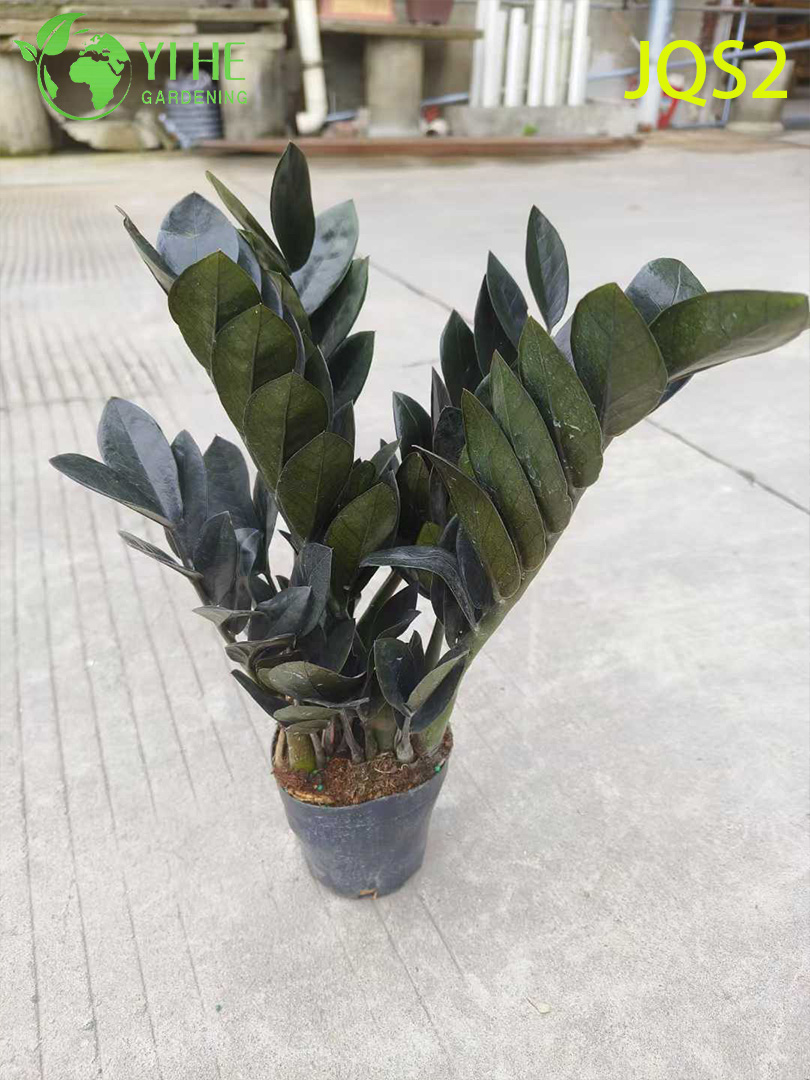
When interior landscaping professionals draft plant procurement lists for corporate clients, one specific species consistently ranks at the absolute top. The Zamioculcas Zamiifolia, commonly referred to as the ZZ plant, is an East African native. It possesses unique botanical characteristics that make it uniquely suited to survive the harsh, artificial environments of modern office buildings.
The resilience of this species stems directly from its evolutionary adaptations. Visually, it features thick, waxy, deep green leaflets arranged symmetrically along arching stems. This waxy cuticle naturally repels dust, which is a constant battle in office settings. It also reflects fluorescent lighting beautifully, maintaining a vibrant, polished appearance with minimal wiping.
More importantly, it utilizes a highly specialized root system consisting of bulbous, potato-like rhizomes. These subterranean structures act as built-in water reservoirs. During periods of drought, such as long holiday weekends or unexpected office closures, the plant draws upon the moisture safely stored within its rhizomes. This biological fail-safe makes a ZZ plant for office settings nearly impervious to erratic watering patterns. Furthermore, premium nursery specimens are cultivated to thrive in standard indoor temperatures ranging from 15 to 25 degrees Celsius, perfectly matching standard commercial HVAC settings.
Unlike many tropical plants that require expansive soil volumes to stretch their roots, the ZZ plant actually prefers to be kept slightly root-bound. Placing them in tight, restrictive containers limits excess moisture accumulation around the rhizomes. This eliminates the primary cause of their mortality, which is root rot.
For optimal display in a commercial setting, juvenile specimens should be maintained in 4 to 6-inch pots for desktop use. Meanwhile, mature specimens perform beautifully in 8 to 10-inch pots for floor placement. Facility managers must be explicitly warned against upsizing their pots too quickly. Moving a moderately sized plant into a massive 14-inch container will inevitably trap too much moisture and lead to rapid subterranean decay.
Modern corporate architecture often features deep floor plates. This results in interior zones completely devoid of natural sunlight. Workspaces reliant entirely on LED or fluorescent lighting require specific botanical selections and a highly modified approach to container sizing.
The relationship between light exposure and container volume is governed by the basic rate of photosynthesis. In simple terms, lower light levels result in significantly slower photosynthetic activity. When a plant photosynthesizes slowly, its transpiration rate drops to a crawl. Transpiration is the process of drawing water up through the roots and releasing it as vapor through the leaves.
Because of this drastically reduced water uptake, low light indoor plants require far less moisture than their sun-drenched counterparts near the windows. If you place a shade-tolerant species in an oversized pot, the plant simply cannot process the heavy volume of water held within the soil. The strict rule of thumb for shaded office zones is to always lean toward a slightly smaller, highly well-draining container. This safeguards the root system against fungal pathogens.
Alongside the ZZ plant, several other hardy species have proven their efficacy in dim commercial environments. When specifying these plants, adhering to conservative starting pot sizes ensures long-term viability.
Sansevieria: Commonly known as the Snake Plant, it features striking vertical, architectural foliage. It stores water efficiently and prefers tight, 6 to 8-inch containers to prevent basal rot.
Epipremnum aureum: Known as Pothos, this is a trailing vine excellent for draping over top shelves or tall filing cabinets. A compact 6-inch pot provides enough soil for years of trailing growth under standard office lighting.
Aspidistra elatior: True to its name, the Cast Iron Plant survives extreme neglect and deep shade. An 8 to 10-inch pot accommodates its slow-growing rhizomatous root system perfectly.
While determining the correct volumetric capacity of a planter is critical for root health, the physical material composition represents the second half of the horticultural equation. In commercial interior landscaping, the material dictates aesthetic integration, physical weight, maintenance frequency, and moisture evaporation rates.
Different planter materials serve distinct functions within a corporate environment. Balancing operational logistics with plant biology is essential for a successful installation.
Fiberglass Planters: This is the premium industry standard for large architectural installations, particularly for containers exceeding 14 inches. The primary advantage is its exceptional strength-to-weight ratio. A massive 20-inch fiberglass planter can be easily repositioned by a single technician. Furthermore, fiberglass is non-porous. It retains soil moisture efficiently to minimize watering frequency in dry office climates.
Ceramic and Terracotta Planters: Ceramic pots are dense and heavy, offering excellent physical stability. This makes them the optimal choice for desktop configurations, as their weight prevents top-heavy plants from tipping onto expensive computer hardware. Unglazed ceramics, such as terracotta, are highly porous. They allow lateral airflow that accelerates soil drying, providing a natural defense against overwatering.
Plastic and Nursery Pots: In professional commercial landscaping, decorative planters are rarely filled directly with loose potting soil. Instead, lightweight high-density plastic nursery pots serve as functional inner liners. They are engineered with superior drainage and allow for the rapid swapping of plants without creating a dirt-filled mess in the workspace.
One of the greatest fears for facility managers is accidental water damage to expensive commercial carpeting or executive hardwood floors. Directly planting into a decorative container with exposed drainage holes requires the use of plastic saucers. Unfortunately, these saucers frequently overflow due to human error during watering, leading to costly facility damage.
To completely mitigate this risk, interior landscapers employ the double potting method, also known as the cachepot technique. This ingenious system involves keeping the plant in its original, precisely sized plastic nursery pot complete with necessary drainage holes. This functional liner is then placed directly inside a slightly larger, completely watertight decorative container. During weekly maintenance, technicians water the plant and allow the excess moisture to drain safely into the bottom of the watertight cachepot. This ensures that no stray drops ever touch the office flooring.
Executing a commercial planting project for a sprawling multi-floor corporate headquarters requires a highly strategic approach to procurement. Purchasing inventory at retail levels is not only budget-inefficient but also introduces unacceptable visual variances in plant maturity, height, and overall aesthetic uniformity. For enterprise-level interior landscaping, transitioning to wholesale procurement is a mandatory operational step.
Securing botanical assets through commercial wholesale channels provides several measurable advantages. First, it guarantees strict uniformity. When you order fifty plants from a single wholesale batch, they will possess nearly identical heights and foliage densities. This uniformity is critical for creating symmetrical design elements, such as flanking a long corporate hallway.
Secondly, commercial budgets require strict optimization. Bypassing retail markups allows project managers to allocate saved funds toward higher-quality decorative fiberglass planters or extended maintenance contracts. Finally, wholesale suppliers understand commercial construction timelines. They can schedule consolidated freight deliveries directly to the loading dock, minimizing the time plants spend wilting in unconditioned transit.
Before initiating a large zamioculcas zamiifolia wholesale order, project managers must conduct a precise spatial audit. Determining exact volumetric requirements prevents costly budget overruns.
A standard corporate framework involves the following steps.
Workstation Audit: Count the total number of individual desks and reception counters. Allocate one 4 to 6-inch plant per station.
Transitional Space Audit: Identify empty corners, hallway intersections, and spaces between filing banks. Allocate 10 to 12-inch floor plants for these zones.
Statement Zones: Identify main lobbies and boardrooms, allocating planters exceeding 14 inches accordingly.
By categorizing the office into these specific requirements, buyers can order wholesale batches that perfectly match their pre-selected decorative vessels.
Once the wholesale shipment arrives at the corporate facility, the critical installation phase begins. Plants relocated from highly controlled, humid greenhouse environments to dry, HVAC-regulated office buildings experience immediate environmental stress. Improper handling during this vulnerable period can lead to severe transplant shock.
The most common error during commercial installations is transferring a newly arrived plant into a decorative container that is vastly oversized. To ensure biological stability, installation teams must adhere strictly to the Two-Inch Rule. If a plant arrives from the wholesale nursery in a 6-inch grow pot, its root system is perfectly calibrated for that exact volume. If repotting is deemed absolutely necessary, it should only be upgraded to an 8-inch pot. This slight increase provides just enough new substrate for the roots to expand over the next two years without creating a hazardous, soggy moisture reservoir.
Implementing a standardized installation and maintenance protocol protects your botanical investment. Instead of playing a guessing game with watering cans, follow these empirical steps.
The Acclimatization Period: Do not repot plants immediately upon delivery. Allow them to sit in their original nursery pots in their designated office locations for 14 to 21 days to adjust to the new lighting parameters.
Soil Moisture Monitoring: Discard subjective watering schedules, such as watering every Friday. Equip maintenance personnel with commercial soil moisture meters. Water only when the meter indicates the lower third of the soil profile is completely dry.
Root Inspection Protocols: Establish a bi-annual audit. Technicians should gently lift the nursery pots to inspect the drainage holes. If dense roots are actively emerging from the bottom, it indicates the plant has exhausted its current volumetric capacity and is ready for a two-inch upgrade.
Choosing the correct pot size is the undeniable foundation of a healthy, vibrant office environment. By always following the simple two-inch rule for container upgrades, you prevent the disastrous effects of root rot and stunted growth. Furthermore, carefully matching the pot volume to your specific indoor lighting conditions ensures that your greenery processes moisture efficiently, even in the deepest, shadow-filled corners of a floor plan.
Selecting incredibly hardy, drought-tolerant species simplifies commercial maintenance drastically, taking the stress out of corporate plant care. Before you launch your next interior landscaping project, take the time to measure your workspace carefully and map out your volumetric needs. With a solid plan in hand, you are ready to source premium wholesale greenery. Visit Yihe Garden today to explore our extensive catalog of resilient indoor plants and expert botanical solutions, and transform your office into a thriving biophilic haven.
Yes, proper drainage is a non-negotiable biological requirement for almost all indoor botanical species. Plant roots require regular oxygen exchange to survive. When water accumulates at the bottom of a container without an escape route, it displaces the oxygen in the soil, creating an anaerobic environment. This condition rapidly promotes the growth of pathogens responsible for root rot, which is fatal to the plant. In a commercial office setting, drilling drainage holes into decorative pots risks severe water damage to carpets. The industry standard solution is the cachepot method. The plant remains in a functional plastic nursery pot equipped with drainage holes, which is then nested inside a completely watertight, decorative outer container. This satisfies the biological need for drainage while fully protecting the corporate infrastructure.
In the context of typical corporate environments, the growth rate of this specific species is empirically classified as slow to moderate. The plant relies on a specialized root system consisting of thick, potato-like rhizomes designed to store water for extended periods. Because office environments typically feature artificial fluorescent or LED lighting rather than direct solar radiation, the photosynthetic rate is naturally suppressed. Under these low-light conditions, you can expect the plant to produce only a few new vegetative shoots per year. This slow metabolic rate is highly advantageous for commercial landscaping, as facility managers will typically only need to budget for labor and materials to increase the pot size every two to three years.
Absolutely. In fact, keeping newly procured plants in their original plastic nursery pots is the recommended best practice within the commercial interior landscaping industry. When plants are shipped from wholesale facilities, their root systems are perfectly calibrated to the volume of their current containers. Leaving them in these functional pots and simply dropping them into decorative cachepots drastically reduces transplant shock during the initial installation phase. Furthermore, it optimizes long-term maintenance logistics. If a plant becomes diseased or declines in appearance, maintenance technicians can quickly lift the plastic liner out and replace it with a fresh specimen without needing to excavate soil inside the office.
Empirical data and ergonomic workspace studies suggest that the optimal container diameter for individual desktop placement ranges between 4 and 6 inches. This specific size bracket offers the ideal compromise between biological viability for the plant and spatial efficiency for the employee. A 4 to 6-inch pot is compact enough that it does not infringe upon the functional footprint required for dual computer monitors, keyboards, and physical document processing. Despite its small footprint, this volume of soil is entirely sufficient to support the root systems of juvenile resilient species for several years, avoiding the visual obstruction and tipping hazards associated with larger pots.
In commercial horticulture, pot size is universally measured by the diameter across the top opening of the container, rather than its height or total volume. For example, a standard 8-inch pot measures exactly 8 inches straight across the rim. When specifying containers for an office fit-out, you must measure the internal diameter of your decorative cachepot. Ensure the internal diameter is at least one inch wider than the external diameter of the plastic nursery grow pot. This slight gap allows maintenance technicians to easily insert and remove the plant without risking damage to the foliage or struggling with a vacuum seal effect.
For climate-controlled commercial spaces, repotting can technically be performed year-round. However, the optimal window for upgrading pot sizes is during the early spring months. During this period, ambient daylight hours naturally increase, which stimulates the plant to exit its winter dormancy and enter an active growth phase. Repotting during active growth allows the root system to rapidly colonize the newly added soil substrate, significantly reducing the risk of transplant shock and waterlogging. Always wait until the plant exhibits clear signs of being root-bound, such as roots protruding from the bottom drainage holes, before initiating a pot size upgrade.


