
- All
- Product Name
- Product Keyword
- Product Model
- Product Summary
- Product Description
- Multi Field Search
Views: 0 Author: Site Editor Publish Time: 2026-11-02 Origin: Site


Moving thousands of live plants across continents is a logistical minefield. Horticultural professionals praise the Ficus genus for its remarkable environmental resilience. However, these delicate miniature trees face severe risks during transit. Sudden drops in temperature, aggressive handling, and severe root trauma can easily wipe out an entire shipment. Proper preparation is the only way to prevent these catastrophic losses. This guide breaks down the exact bulk packing methodologies required to safeguard your inventory across long freight journeys. By implementing these engineering-grade protocols, you ensure your plants arrive in pristine, retail-ready condition.
Recent supply chain data highlights a massive shift in global horticultural logistics. Driven by the surging demand for biophilic commercial spaces, the cross-border transit volume of ornamental trees has skyrocketed over the past three years. Freight carriers and agricultural departments now enforce ultra-strict compliance standards. Makeshift packing methods simply no longer work. Modern commercial nurseries must adopt standardized, climate-controlled, and sustainable packaging solutions. This industry-wide evolution drastically reduces inventory mortality during unpredictable port delays. It ensures delicate specimens like the indoor ficus bonsai clear customs smoothly and survive the journey intact.
Precision Pre-Conditioning: Managing hydration and conducting structural pruning 48 hours before shipping dramatically lowers transit stress.
Mechanical Root Security: Advanced taping configurations lock the substrate in place, shielding the fragile feeder roots from vibration and impact trauma.
Structural Foliage Protection: Custom die-cut supports and breathable sleeves prevent branch fractures, securing top-heavy morphological varieties.
Active Climate Control: Thermal insulation and timed heat packs are non-negotiable for protecting tropical species against brutal freight temperature swings.
Strict Phytosanitary Compliance: Bulk shipments demand flawless adherence to regional agricultural inspections to prevent costly border incinerations.
You cannot simply throw a live tree into a box and expect it to survive. Preparing a specimen for an extended freight journey starts days before the physical packaging sequence. Conditioning protocols optimize the internal cellular hydration of the plant. This critical step minimizes active transpiration while the tree sits in a dark, enclosed cargo hold. Skipping this phase guarantees your trees will arrive severely desiccated.
Managing hydration levels requires exact timing. The goal is to achieve a perfectly balanced moisture state within the root zone. The growing substrate must be damp but never soaking wet. Oversaturated soil inside an unventilated shipping container acts as a breeding ground for anaerobic bacteria and fungal pathogens. Facility operators need to water the bonsai thoroughly 12 to 24 hours before packing. This specific window allows root tissues to absorb maximum hydration while gravity drains the excess water. The soil should feel exactly like a wrung-out sponge.
Horticultural preparation also involves physical canopy modifications. Operators must lightly prune excessive or non-structural foliage. Reducing the total leaf surface area limits moisture loss, helping the tree conserve its internal water reserves. Removing deadwood and fallen debris is equally vital. Decaying organic matter accelerates the production of ethylene gas inside a sealed box, which triggers rapid and devastating leaf drop in healthy foliage.
Freight carrier data reveals a harsh truth. The most frequent cause of transit damage is a loose, heavy container acting like a wrecking ball inside the cardboard box. If a heavy ceramic training pot shifts during transit, it will crush the canopy or dislodge the root ball entirely. If fine feeder roots are exposed to ambient air, desiccation happens in hours.
To eliminate this risk, logistics engineers rely on the tape-and-seal method. First, a layer of damp sphagnum moss is placed directly over the soil surface. Heavy-duty strapping tape is then applied in a high-tension star pattern. This anchors the lip of the container firmly to the base. Even if the box is inverted during warehouse sorting, the soil matrix remains locked in place. Next, operators bag the container in a polyethylene sack tied tightly at the base of the trunk. This creates a localized micro-humidity chamber, trapping substrate moisture and preventing it from evaporating into the larger corrugated box.
Bare-root shipping offers a completely different approach for large-scale agricultural transfers. This method significantly reduces freight weight and complies with strict international soil import bans. The roots are pressure-washed, treated with a mild fungicidal dip, wrapped in moistened long-fiber sphagnum moss, and sealed in a plastic membrane to lock in critical humidity.
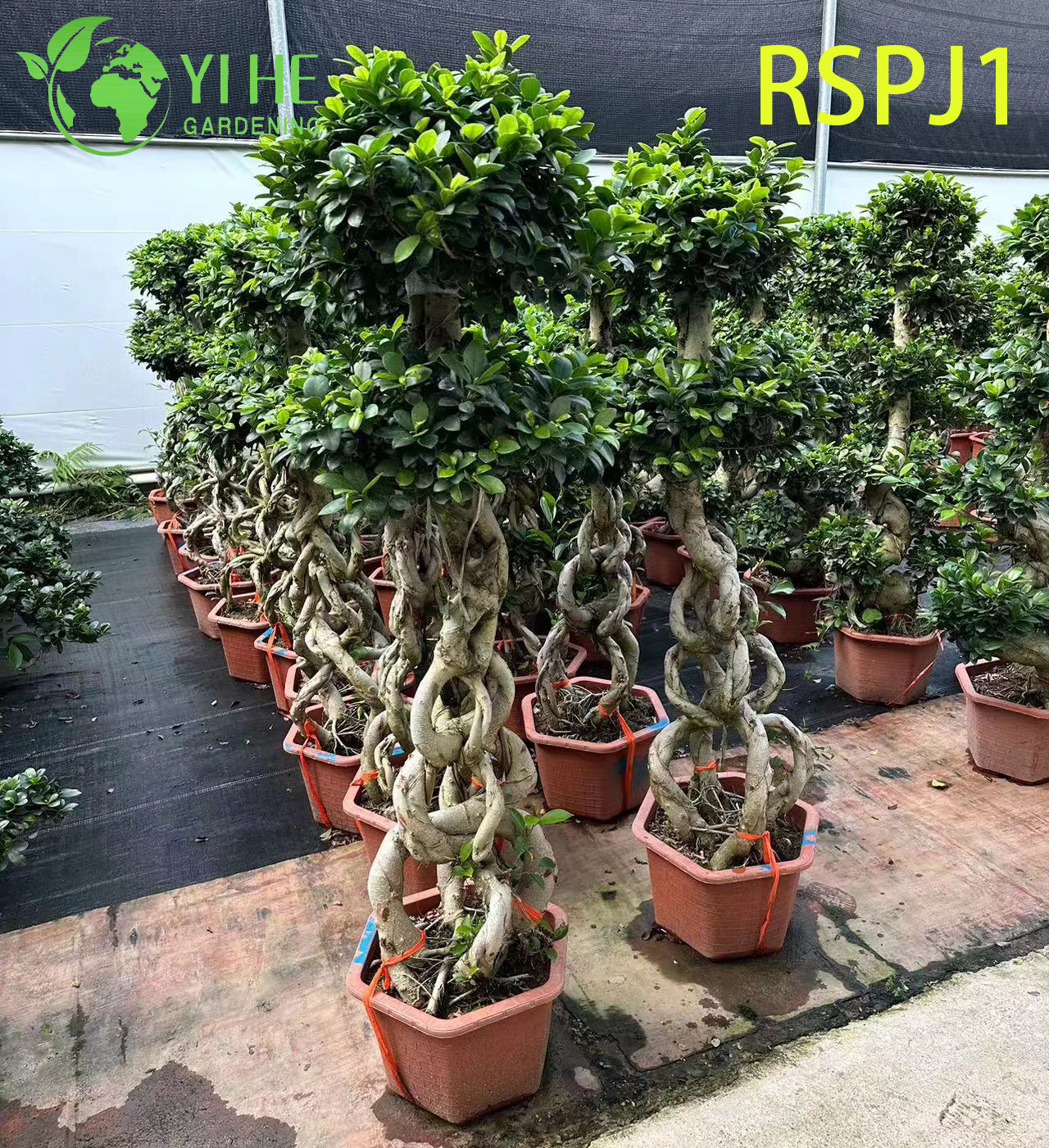
Different cultivars present unique physical engineering challenges. Take the ficus microcarpa bonsai as a prime example. Characterized by its swollen basal roots and dense upper canopy, this variety possesses a dangerously high center of gravity. This asymmetrical weight distribution demands specialized packaging geometry. Without it, the trunk will snap during sudden forklift impacts.
Protecting the upper structure means compressing the foliage canopy safely. Operators draw breathable paper sleeves or extruded plastic mesh nets upward from the base of the trunk. This collapses the branches inward without causing micro-fractures. Never use impermeable plastic shrink wrap over living foliage. It traps cellular respiration byproducts and induces rapid rot. For interior voids between primary branches, operators pack shock-absorbing materials like shredded kraft paper to dampen transit vibrations.
Trunk stabilization is the ultimate defense against high centers of gravity. Shippers utilize custom die-cut corrugated cardboard collars for thick woven trunk artistic varieties. These rigid inserts fit snugly around the thickest portion of the trunk and lock directly into the sidewalls of the outer shipping box. By suspending the tree by its strongest structural point, lateral shifting drops to zero. The delicate apex never bears the crushing weight of the container.
The structural integrity of the outer packaging serves as the final barrier between valuable agricultural inventory and the brutal realities of global freight networks. Fulfilling a massive wholesale ficus bonsai order requires procurement managers to select materials rated for high edge-crush tests. Box failure is not an option.
The volume and weight of the shipment dictate the primary external housing. Double-walled corrugated cardboard is mandatory for individual specimens, offering excellent vertical crush resistance. For high-volume international freight, ISPM-15 certified wooden crates remain the gold standard. Crates provide maximum puncture resistance, handle forklift manipulation flawlessly, and allow for superior airflow.
To streamline your procurement process, refer to this standard packaging selection matrix:
Transit Method | Outer Packaging Shell | Recommended Void Fill | Best For |
|---|---|---|---|
Domestic Ground Freight | Double-Walled Corrugated Box | Heavy-weight Kraft Paper | Potted specimens under 15 lbs |
Expedited Air Freight | Triple-Walled Corrugated Box | Biodegradable Packing Peanuts | High-value artistic trunks |
International Ocean Freight | ISPM-15 Certified Wooden Crate | Custom Die-Cut Cardboard Collars | High-volume bare-root shipments |
Empty space inside the container is a severe liability. Void fill materials must be packed tightly into all corners. For premium, mature specimens, the box-in-a-box method is highly recommended. The plant is secured in a smaller inner carton, which is then suspended inside a larger outer carton filled with three inches of shock-absorbing material on all sides. This creates an impenetrable buffer zone.
These plants originate from tropical climates. Consequently, they are highly susceptible to thermal shock. Exposure to temperatures below 50 degrees Fahrenheit causes irreversible cellular damage. Temperatures exceeding 90 degrees Fahrenheit in a sealed box will accelerate dehydration and ethylene-induced defoliation. Managing the internal micro-climate is a non-negotiable operational requirement.
Winter logistics require specialized insulation. Shipping cartons must be lined with foil-backed thermal bubble wrap. This material reflects radiant heat back into the box while blocking external cold transfer. Extended-release shipping heat packs rated for 72 to 96 hours should be taped securely to the upper interior walls. These packs require oxygen to generate heat. They must never touch plant tissue directly, as localized thermal burns will instantly occur. Summer transit requires mitigating heat accumulation through phase-change cooling packs and expedited air freight.
Live agricultural products continue to respire during transit. Bulk crates and corrugated boxes must feature strategically placed ventilation ports. These perforations allow accumulated ethylene gas and excess humidity to escape, drastically reducing the probability of fungal proliferation and severe leaf drop upon arrival.
Regional and international authorities strictly regulate the movement of live agricultural commodities to stop invasive pests and soil-borne pathogens. Navigating this bureaucratic landscape requires precision. A single paperwork error can ruin an entire shipment.
A Phytosanitary Certificate is a mandatory legal document for international commerce. Issued by a recognized government agricultural inspector, this certificate verifies the shipment is free from regulated pests like scale insects and burrowing nematodes. Within domestic borders, specific states enforce their own agricultural quarantines. These often require specialized nematode certifications proving the cultivation substrate has been chemically treated.
Commercial shippers must clearly differentiate between domestic and international protocols. Domestic freight generally permits the transport of plants in their original cultivation soil. International customs regulations frequently mandate bare-root shipping. Failing to comply with these exact specifications routinely results in the immediate incineration of the cargo at the port of entry.
The logistical lifecycle concludes only when the plants are successfully acclimated at the receiving facility. Providing standardized unboxing protocols to your wholesale buyers minimizes post-transit mortality and builds commercial trust.
Receivers must process the shipment immediately upon arrival. Unboxing should occur in a temperature-controlled, shaded staging area. Exposing a plant that has been in total darkness for several days to intense, direct sunlight causes severe photoinhibition and leaf scorch. The substrate must be evaluated for moisture content. If it is desiccated, thorough watering is required. The application of chemical fertilizers must be strictly avoided for a minimum of 14 days to prevent osmotic root burn.
Buyers need to understand expected physiological responses. Ficus species frequently shed up to 20 percent of their foliage following transit due to the interruption of photosynthesis. This partial defoliation is a temporary metabolic reset, not an indicator of terminal decline. With appropriate ambient lighting and controlled watering, dormant buds will initiate new foliar growth within three weeks.
Mastering bulk plant shipping requires a meticulous balance of biological preparation, mechanical stabilization, and active climate control. Precision hydration prevents severe root damage, while engineered packaging materials stop physical trauma to delicate branches. By strictly adhering to agricultural laws, your shipments will clear customs without unexpected delays or quarantine destruction. Ready to upgrade your nursery inventory with premium, transit-hardy specimens? Explore our robust selection of commercial-grade plants at Yihe Garden to find the perfect fit for your next wholesale project, ensuring your orders arrive ready to thrive in their new environments.
Data indicates that a properly hydrated and temperature-controlled plant can remain viable inside a shipping carton for 5 to 7 days. Expedited transit times of 2 to 3 days are standard industry practice to minimize physiological stress, prevent severe ethylene accumulation, and reduce post-transit defoliation.
These species possess a high sensitivity to sudden environmental shifts. Confinement in a dark shipping container halts photosynthesis and alters the plant's metabolic state. As a biological defense mechanism, the tree sheds foliage to conserve internal energy reserves. New growth typically resumes once the plant acclimates to a stable light cycle.
For domestic logistics, shipping the plant in its cultivation pot is heavily favored to preserve the fine feeder root system and reduce recovery time. International wholesale shipments generally require bare-root processing to comply with strict soil import bans and to optimize dimensional freight costs.
Shipping early in the week, ideally Monday or Tuesday, is the safest operational strategy. This schedule ensures the packages remain in continuous motion through the carrier network, preventing live plants from sitting in unconditioned sorting warehouses over the weekend.
Surface mold occasionally develops due to the high-humidity microclimate inside the shipping box. To treat it, immediately improve ambient airflow around the plant, gently scrape away the top layer of affected soil, and apply a mild horticultural fungicide or diluted neem oil solution.
To prevent cold shock, shippers line corrugated boxes with reflective thermal insulation like foil-backed bubble wrap. Extended-release chemical heat packs are secured to the interior walls. These packs stabilize the internal microclimate but must be positioned away from direct contact with foliage to prevent thermal damage.


