
Views: 0 Author: Site Editor Publish Time: 2026-06-07 Origin: Site


The global demand for resilient, low-maintenance flora has surged over the past decade. Buyers everywhere want hardy species to elevate commercial landscapes and private botanical collections. Expanding into the international plant trade requires balancing high market demand with the strict realities of phytosanitary compliance, prolonged transit stress, and mortality risks. Unprepared shipments often face devastating fungal outbreaks or outright customs rejection. Selecting the right plant varieties for export requires a matrixed evaluation of regional demand, morphological resilience (water retention vs. rot susceptibility), and the supplier's cultivation methodology. We intend to provide commercial buyers and exporters with an evidence-based framework for shortlisting, vetting, and safely transporting cacti and succulents across borders. You will discover how to match specific species to transit methods effectively. You will also learn to navigate complex regulatory frameworks and assess vendor readiness before committing capital.
Match morphology to transit timelines: Choose thick-stemmed, low-surface-area varieties for prolonged sea freight; reserve fragile, thin-leaved specimens for expedited air freight.
Segment by market application: Differentiate bulk sourcing for landscaping (e.g., drought tolerant plants) from specialized sourcing for high-margin collector markets.
Factor in transit preparation: Viable export requires strict bare-rooting, air-drying, and dormancy induction to prevent fungal rot during prolonged dark transit.
Verify regulatory compliance early: Exporting requires exact taxonomic identification to clear CITES (Convention on International Trade in Endangered Species) and phytosanitary inspections.
Defining the end-use dictates your entire export strategy. Volume-based exports generally target landscaping buyers needing structural, low-maintenance varieties. These buyers purchase in bulk to populate urban hardscapes, commercial properties, and residential gardens. Conversely, niche markets demand rare genetics. Collectors seek unique mutations, compact rosettes, and pristine colors. You cannot treat both segments identically. They require different transit methods, packaging densities, and loss-tolerance calculations.
Market Segment |
Primary Requirement |
Ideal Transit Method |
Volume Capacity |
|---|---|---|---|
Commercial Landscaping |
Structural durability, rapid acclimatization |
Sea freight (prolonged) |
High (Container volume) |
Collector Markets |
Aesthetic perfection, rare genetics |
Air freight (expedited) |
Low (Box/Pallet volume) |
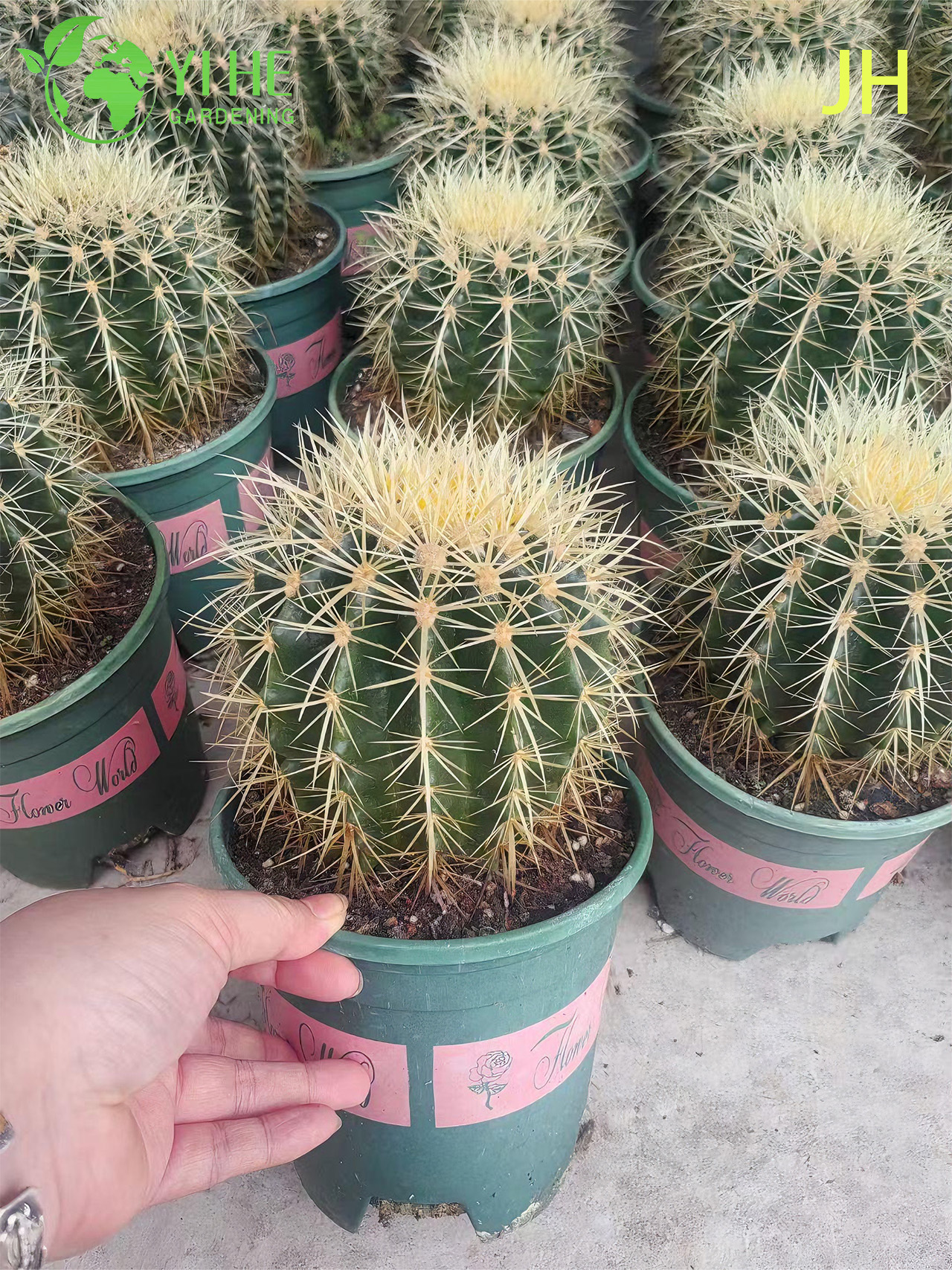
Bulk landscaping exports require rugged plants. We consistently highlight the structural hardiness of the golden barrel cactus (Echinocactus grusonii) as an ideal candidate for bulk international landscaping markets. This species demonstrates immense transport durability. Its spherical shape naturally resists crushing during palletization. Furthermore, its thick epidermal cuticle locks in moisture effectively. You can ship these staples over several weeks via sea freight. They arrive slightly dehydrated but rapidly plump up once replanted and watered.
Smart exporters often look for dual-purpose plants to diversify their revenue streams. You must evaluate the dual-purpose market for the dragon fruit cactus (Hylocereus). We assess its viability for both ornamental export and commercial agricultural propagation. Nurseries cultivate this vigorously growing epiphyte as a robust rootstock for grafting weaker collector cacti. Simultaneously, agricultural buyers import vast quantities of specific fruit-bearing cuttings to establish commercial orchards. This versatility mitigates demand fluctuations across different seasons.
Boutique plant shops and private collectors drive significant revenue. However, you must carefully analyze the cost-to-risk ratio of exporting a variegated succulent. These command premium pricing but feature reduced chlorophyll. This genetic mutation makes them highly susceptible to etiolation (stretching) and rapid deterioration during dark shipping. They rely entirely on their limited green tissue to produce energy. Placing them in unlit cardboard boxes for weeks often triggers severe stress responses. Successful export demands rigorous pre-shipment dehydration to force deep dormancy, halting active growth entirely.
Premium retail buyers constantly search for intense, vibrant plant colors. Specific climates produce the compact, intensely colored rosettes desired by this market. Cold, dry winters or highly controlled greenhouse environments trigger an adaptive response known as "stress coloring." Plants exposed to intense ultraviolet light and minimal water generate protective pigments like anthocyanins. Korean and Japanese nurseries excel at this technique. They yield visually stunning specimens. However, these meticulously curated plants possess delicate root systems. They require careful handling and swift transit to maintain their boutique appearance.
Mass commercial deployments rely on fundamentally different farming models. We must evaluate domestically grown, open-field drought tolerant plants (e.g., Agave, large Cereus). Nurseries prioritize rapid sizing and immense root mass over aesthetic perfection. They grow these robust specimens directly in native earth under harsh natural elements. This methodology makes them ideal for bulk commercial exports and outdoor zoning projects. They endure transit shocks remarkably well. While they might display minor cosmetic scarring from wind or insects, their survival rate post-export remains exceptionally high.
Choosing a supplier origin depends heavily on your post-receipt capabilities. You must align the sourcing model with the buyer's internal infrastructure. The chart below helps exporters map cultivation origin to the appropriate downstream buyer.
Cultivation Origin |
Aesthetic Quality |
Root System Strength |
Buyer Post-Receipt Infrastructure Required |
|---|---|---|---|
Specialized Greenhouse |
Flawless, vibrant colors, compact |
Delicate, shallow |
Shade cloths, gradual light acclimatization, misting systems |
Open-Field |
Natural scarring, larger growth |
Massive, robust, deep |
Standard potting benches, immediate outdoor planting viable |
Greenhouse-stressed plants require careful light acclimatization upon arrival. Direct sun exposure will scorch them immediately. Conversely, field-grown plants offer higher immediate resilience but may lack boutique visual appeal right out of the box.
Understanding plant anatomy solves many export mysteries. The high internal-tissue-to-surface-area ratio of cacti protects against water loss perfectly in deserts. However, it increases the risk of systemic rot in unventilated, high-humidity shipping containers. When temperatures fluctuate during sea freight, condensation forms inside the boxes. Fungal spores thrive in this trapped humidity. A single rotting stem quickly spreads pathogens to neighboring plants. Exporters must manipulate the shipping environment meticulously to maintain absolute dryness.
International agricultural laws strictly prohibit shipping soil. We must implement the mandatory operational standard of shipping rootless or bare-root plants. This practice eliminates soil-borne pests and drastically reduces shipping weight. Properly executing this mandate requires precise timing.
Soil Extraction: Workers carefully remove plants from pots, shaking off all loose substrate.
Root Trimming: They aggressively trim fine feeder roots, leaving only thick taproots. Fine roots die in transit anyway and invite rot.
The Air Dry Phase: Nurseries place the bare plants on wire racks in shaded, well-ventilated areas for 7 to 14 days.
Dormancy Induction: The extended dry period forces the wound to callous completely before packing, preventing opportunistic fungal infections.
Skipping the air-dry phase guarantees disaster. Packing a freshly cut root into a dark box initiates rapid decay within forty-eight hours.
Landing the shipment safely constitutes only half the battle. You must factor in the receiving party's capability. Buyers must possess the facility infrastructure to re-induce rooting and reverse dehydration after weeks of dark transit. The unpacking protocol requires laying plants flat in bright, indirect light for several days. Immediate watering shocks the dormant system. Only after signs of new root nubs appear should buyers introduce deep moisture. Sellers should actively communicate these recovery steps to minimize unfair refund requests based on temporary fading or wrinkling.
Agricultural inspectors act as the final gatekeepers. They enforce a zero-tolerance policy for common nursery pests. Detecting a single mealybug or scale insect often results in the immediate destruction of an entire shipment. Standardized pre-export quarantine treatments act as non-negotiable evaluation criteria for suppliers. Export-grade nurseries submerge bare roots in systemic pesticides and alcohol baths weeks prior to boxing. You must visually inspect sample photos of the root nodes to ensure absolute cleanliness.
Ignoring international conservation laws destroys businesses overnight. Exporters face severe legal and financial risks if they export protected ornamental cacti unlawfully. You must cross-reference Appendix I and II databases rigorously. This ensures wild-harvested endangered species never enter your supply chain.
Appendix I: Includes species threatened with extinction. Commercial international trade is strictly prohibited. Only exceptional scientific shipments pass.
Appendix II: Includes species not necessarily threatened yet, but trade must be controlled. Artificial propagation certificates and export permits are mandatory.
Relying solely on a supplier's verbal assurance is dangerous. Always demand official documentation proving the plants were artificially propagated in a certified nursery.
Nomenclature matters heavily at border control. Customs inspections rely on accurate Latin nomenclature. We must warn buyers against supplier naming discrepancies. Shady vendors sometimes "re-name" old varieties to manufacture artificial scarcity, charging higher prices for common goods. Worse, using slang or inaccurate commercial names on shipping manifests flags the shipment for manual inspection. Misidentifying a CITES-regulated plant as a common succulent results in immediate shipment seizure, hefty fines, and potential revocation of your import license.
A beautiful catalog means nothing if the nursery lacks logistical discipline. You must assess the nursery's internal protocol for soil removal, fungicide application, and moisture reduction prior to boxing. Experienced export vendors maintain dedicated "clean rooms." They separate export stock from domestic stock entirely. Ask potential vendors to outline their exact timeline from order placement to box sealing. If they claim they can ship a large bare-root order within 48 hours, they are likely skipping the critical callousing phase.
Paperwork delays kill plants faster than pests. Ensure the vendor has a proven track record of securing timely phytosanitary certificates and CITES permits without delaying freight schedules. Incompetent vendors often pack the plants, then wait weeks for local agricultural inspectors to issue certificates. During this wait, the boxed plants degrade rapidly. Professional nurseries maintain strong relationships with local authorities, orchestrating inspections smoothly to align with flight or sailing departures.
Shipping live organics carries inherent risk. Even perfect shipments experience minor losses. You must establish baseline expectations for acceptable transit loss (shrinkage) upfront. Typical allowable shrinkage ranges from 2% to 5%, depending on the species and transit duration. Define financial liability clearly in your contracts for shipments rejected at the destination port due to pest presence. Reputable vendors will replace or refund plants seized due to their failure to clean the roots properly. They will not, however, cover losses caused by customs clearance delays outside their control.
Successful exportation of cacti and succulents relies less on the aesthetic appeal of the plant and more on its physiological readiness for transit and regulatory compliance. Securing beautiful specimens means very little if they rot in transit or fail customs inspections. Exporters and buyers must prioritize strict bare-rooting protocols, verifiable taxonomic documentation, and post-arrival recovery infrastructure.
Always build supplier relationships incrementally. Advise buyers to run small-batch, mixed-variety trial shipments first. This allows you to test vendor documentation accuracy and transit survivability safely. Only after a vendor proves their logistical competence should you commit to container-volume purchase orders. Mastering this framework ensures a highly profitable, sustainable international trade operation.
A: Survival depends heavily on species variability. Generally, properly calloused and completely dry specimens survive 2-4 weeks in transit. Thick-stemmed cacti can easily push past 4 weeks. Thinner-leaved succulents degrade faster. Maintaining complete darkness and low humidity prevents rot during this extended period.
A: Yes, in many cases. Wild-collected and nursery-grown plants face different CITES regulations, but Appendix I species almost always require strict documentation regardless of origin. Even for Appendix II species, you must secure an artificial propagation certificate to prove the plants were legally cultivated, not poached.
A: Complete darkness combined with strict dehydration induces a dormant state. This deep dormancy pauses active growth entirely. Without water to fuel cellular expansion, the plant stops trying to stretch toward light. It prevents etiolation until you reintroduce light and water at the final destination.


