
- All
- Product Name
- Product Keyword
- Product Model
- Product Summary
- Product Description
- Multi Field Search
Views: 0 Author: Site Editor Publish Time: 2026-04-21 Origin: Site


Coastal planting often has to deal with salt in the air, strong wind, heat, and sandy ground at the same time. In that kind of environment, Casuarina equisetifolia is valued not simply for its appearance, but for how well it responds to real site pressure. At YIHE, this tree is often used in outdoor projects that need both visual structure and dependable performance. For customers looking into Casuarina equisetifolia benefits, the real question is straightforward: what makes this tree useful in exposed coastal landscapes, and why is it chosen so often?
One of the biggest strengths of Casuarina equisetifolia is that it handles several coastal challenges together rather than just one. Many trees may tolerate strong sun but not salt spray. Others can survive dry periods but struggle in poor sandy soil. Coastal projects rarely face these conditions separately, so a tree used in this setting has to cope with them as a combination.
Salt tolerance matters because sea wind can quickly damage foliage and reduce ornamental value. A tree that looks attractive in a protected nursery setting may lose quality after repeated exposure near the shoreline. Casuarina equisetifolia is better suited to that environment, which is one reason it appears so often in seaside planting.
Drought adaptation is equally important. Sandy soil drains fast, especially in hot and windy weather, and many plants fail to establish well in those conditions. Casuarina equisetifolia offers a more practical option because it is far more comfortable in lean, fast-draining ground than many softer ornamental trees.
Sun exposure is another constant factor in coastal landscapes. Open sites usually receive long hours of direct light, with little shelter from buildings or surrounding vegetation. This tree performs well in bright, exposed settings, making it suitable for beachfront developments, coastal roads, public greenbelts, and resort landscapes.
A coastal landscape should not stay empty or weak-looking for too long after planting. Faster establishment matters because it helps the site gain structure, protection, and visual definition sooner. This is one of the more practical Casuarina equisetifolia benefits for projects that need visible progress in a relatively short period.
In resort developments, earlier establishment can improve the look of boundaries and open spaces more quickly. In municipal planting or roadside schemes, it helps the landscape appear more ordered at an earlier stage. In exposed sites, this also means the planting has a better chance of becoming stable before wind and dry conditions create additional stress.
For large outdoor projects, this early performance can be especially valuable. It supports both function and appearance, which is exactly why the tree is often treated as more than a basic decorative choice.
Wind can influence almost every aspect of a coastal site. It affects comfort, dries the soil faster, and can make nearby planting harder to manage. Casuarina equisetifolia is often valued because it helps reduce that impact while still fitting naturally into the landscape.
Used in rows or grouped planting, it can support windbreak functions and improve the way open spaces perform. This is particularly useful in waterfront areas, coastal roads, open resort grounds, and public landscapes where strong airflow is part of everyday conditions. A tree that helps soften wind brings value not only to the planting itself, but to the entire site experience.
Another important advantage is the tree’s relevance in sandy outdoor environments. Coastal ground can be loose, exposed, and more vulnerable to movement or erosion. That means planting choices need to support more than surface beauty. They should also suit the ground they are meant to improve.
Casuarina equisetifolia is often associated with planting plans where sandy site conditions are part of the challenge. It contributes to landscapes that need stronger environmental fit, especially in shoreline projects, dune-edge planting, and other exposed areas where ground stability matters.
This makes the tree especially useful for customers who are not only planning how a project should look, but also how it should hold up over time.
Shade is a practical landscape benefit, not just a visual extra. In parks, roadsides, coastal properties, and resort grounds, the ability to create more comfortable outdoor space adds real value. Casuarina equisetifolia can help provide that value while keeping the site visually open and natural.
Its canopy does not create an overly heavy effect, which makes it a good fit for waterfront and broad outdoor settings. Instead of closing off the landscape, it helps soften it. That lighter shade quality is one reason the tree works well in projects where comfort, scale, and openness all matter.
Benefit | Why Clients Care | Typical Use Scenario |
Salt, drought, and sun tolerance | Better fit for harsh coastal environments | Beachside developments, shoreline planting |
Fast establishment | Earlier visual effect and quicker site definition | Resorts, roadsides, municipal projects |
Wind protection | Improved comfort and reduced exposure | Greenbelts, parks, open coastal spaces |
Better site fit in sandy ground | Supports more stable outdoor planting plans | Dune-edge and coastal landscape projects |
Practical shade | Adds comfort to outdoor areas | Parks, roadsides, resort grounds |
Strong visual structure | Keeps the landscape attractive as well as functional | Public and commercial coastal projects |
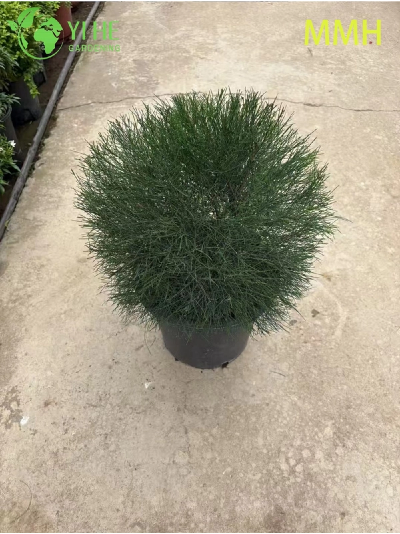
Large-scale planting usually works best when each plant can do more than one job. That is one of the reasons Casuarina equisetifolia continues to be used in bigger projects. It can contribute to wind protection, visual structure, shade, and site adaptation at the same time, which makes planning more efficient and more coherent.
In a coastal buffer, the tree can help reduce exposure while building a cleaner planted edge. In a resort or public park, it can add height, texture, and usable shade while still coping with tough site conditions. Along roadsides or public open land, it can support a practical landscape strategy that remains useful after installation rather than looking good only at the beginning.
For buyers handling larger outdoor schemes, this multi-purpose value matters. A tree that supports several goals at once can simplify the planting concept and reduce the need to rely on multiple species for separate functions. That makes Casuarina equisetifolia especially appealing in projects where durability and clarity of design are both important.
Commercial landscape value often begins with reduced risk. A tree becomes more useful when it can work in places where many alternatives are limited. Casuarina equisetifolia has that advantage in coastal and exposed settings.
When a site includes salt exposure, sandy soil, dry conditions, and long hours of sun, plant choices become narrower. Delicate species may require more protection and may still fail to adapt well. Casuarina equisetifolia reduces that uncertainty by offering a more dependable fit for harsh outdoor locations.
Some trees are chosen almost entirely for function, while others are selected mainly for their decorative value. Casuarina equisetifolia sits in a more useful middle ground. It helps solve practical site problems, but it also keeps the landscape visually attractive.
Its fine texture and upright form give large spaces movement and structure without making them feel too dense. In coastal landscapes, that balance matters. Clients usually want a planting scheme that performs well, but they also want the site to look intentional and well-designed. This tree helps achieve both.
Long-term value is one of the strongest reasons to consider this species. Wind exposure, sandy ground, shade needs, and site structure are not short-term concerns in coastal projects. They remain relevant throughout the life of the landscape. Casuarina equisetifolia stays useful because its strengths continue to match those needs over time.
That makes it a practical option for repeatable landscape use. It is not selected for a temporary decorative effect. It is selected because it supports a more stable outdoor planting strategy from the early stages through later development.
Readers who search this topic are usually looking for a tree that performs under pressure. Resort developers may be comparing options for beachfront planting. Landscape planners may be reviewing trees that can combine resilience with a clean visual effect. Municipal greening teams may need reliable choices for exposed public land. Property developers may want a tree that improves both function and appearance in open outdoor areas.
For these readers, the value of a benefit-focused article is simple. It turns a broad keyword into a practical project answer. Instead of vague praise, they need to know whether this tree really works where the site is hot, windy, sandy, or close to the sea. That is exactly where Casuarina equisetifolia becomes most relevant.
It is also useful for customers who are still refining their own planting goals. Some begin by thinking about appearance, then realize the site needs wind protection or better ground adaptation. Others start with a functional problem and want a tree that still looks elegant in the finished landscape. This species stays relevant to both types of demand.
The real Casuarina equisetifolia benefits become clear when a project needs more than a decorative tree. In exposed coastal landscapes, it offers a reliable mix of adaptation, protection, shade, and visual structure that supports long-term outdoor use. For developments facing salt, wind, heat, and sandy ground, Ornamental Coastal Casuarina equisetifolia Tree remains a practical option for professional planting plans. YIHE supplies trees for different landscape applications and supports customers with project-based plant solutions. If you are planning a coastal project and want to discuss sizes, quantities, or planting use, contact us for more details.
The main benefits include tolerance to salt, drought, and strong sun, along with practical value in wind protection, shade, and better adaptation to sandy outdoor environments.
No. While it has an elegant form and attractive texture, it is widely used because it also supports wind management, outdoor comfort, and more reliable planting in exposed sites.
Fast establishment helps the site gain structure and function earlier. It can improve the look of a project more quickly and help the planting become stable before harsher conditions create extra stress.
It is especially useful for resort developers, coastal landscape planners, municipal greening teams, and property owners managing sunny, windy, or sandy outdoor sites.


